Translated Introduces Lara 3, a Translation- Specialized LLM That Outperforms Frontier Systems on Qu
- Self-evaluation (quality estimation) is now part of the training process, enabling the model to learn from its own work and reducing the need for more data and additional quality-estimation steps.
- Lara 3 is SOTA in public benchmarks and, in real production environments, significantly outperforms all leading MT and AI models thanks to its automatic terminology, context, and style adaptation.
ROME, July 30, 2026 – Translated, a global leader in AI-powered language solutions, today announced Lara 3, a new specialized AI model for translation. Lara 3 introduces a new training technique named Learn by Doing, enabling the model to learn from its own work. In real production environments, Lara 3 achieved the highest quality scores among the leading translation systems and frontier AI models tested while also delivering the highest throughput and cost efficiency.
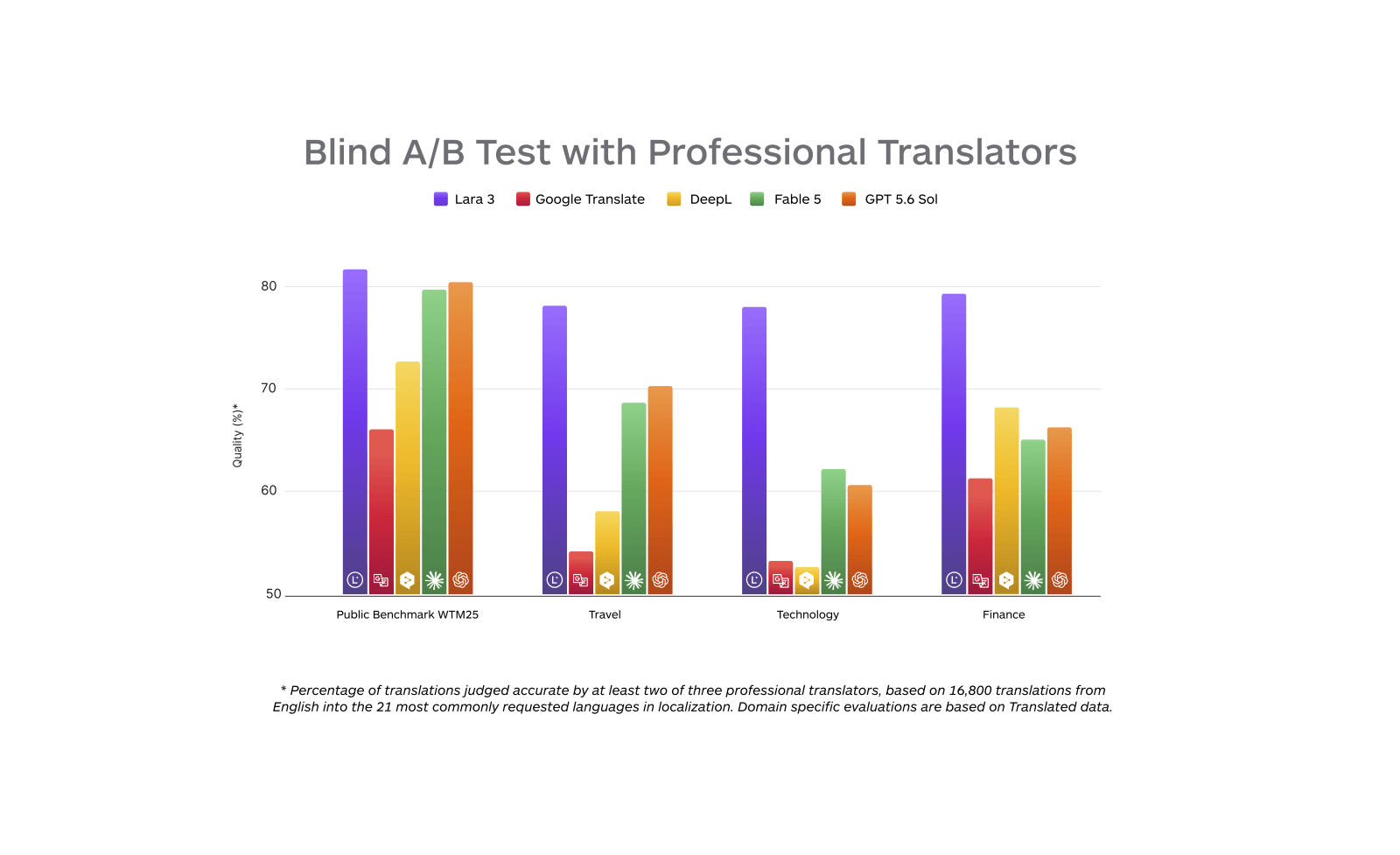
In blind A/B evaluations conducted by professional translators using data from the WMT 2025 benchmark, which spans books, news, and user conversations, Lara 3 outperformed the AI systems tested, with an even wider margin over MT systems. Enterprise localization is where the difference becomes more significant. It requires consistent brand voice, terminology and style-guide compliance, product context, and content that feels native across every market and channel. When tested in real production environments, thanks to its distinctive ability to automatically adapt to the user’s terminology, context, and style, Lara delivers a level of quality other systems cannot match. In these evaluations, professional translators have consistently preferred Lara 3 over leading MT systems, including Google Translate and DeepL, and frontier AI models, including Claude Fable 5 and OpenAI GPT-5.6.
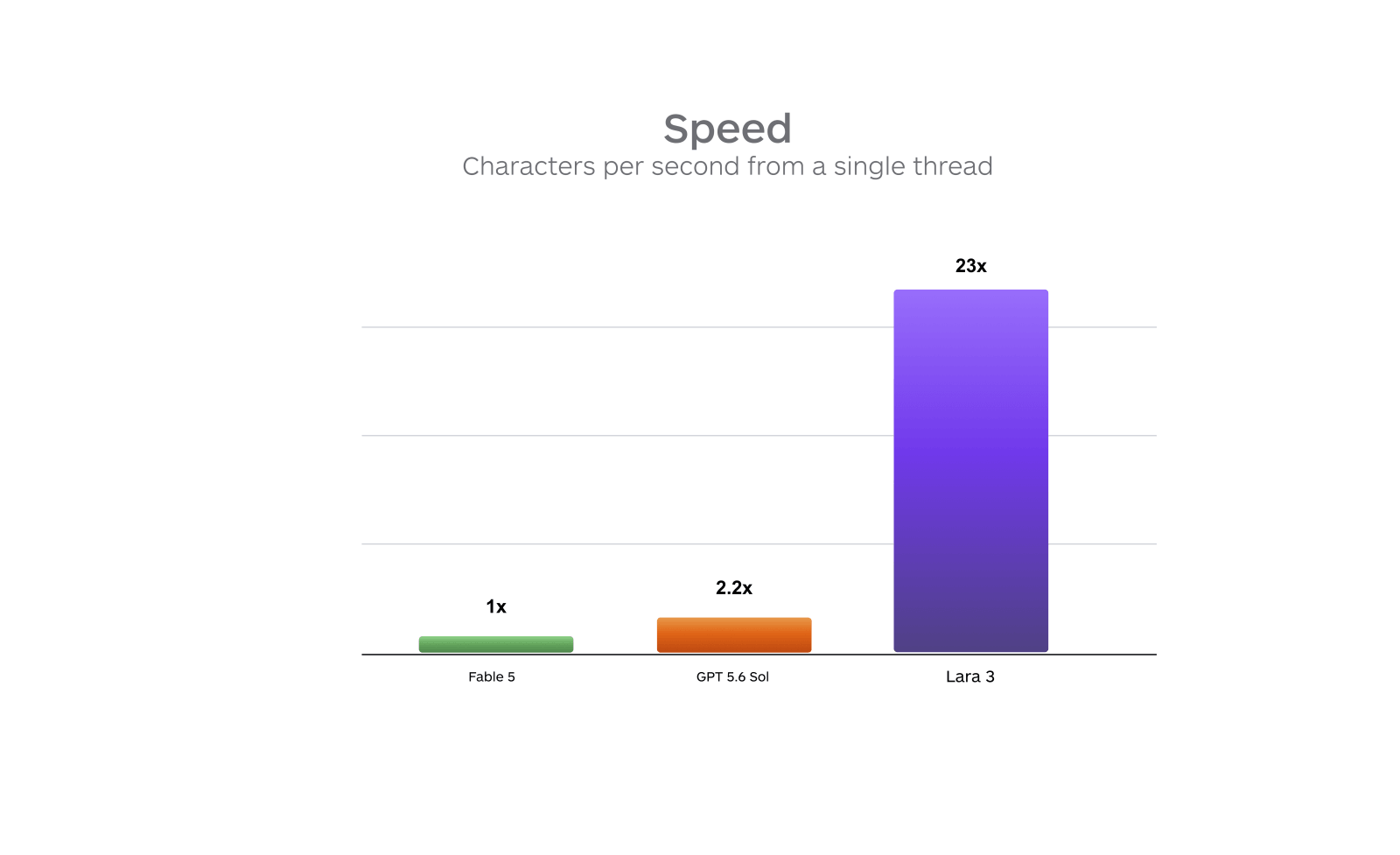
Among the top-performing models for quality, Lara 3 delivered the highest throughput, translating 23 times as many characters per second as Claude Fable 5.
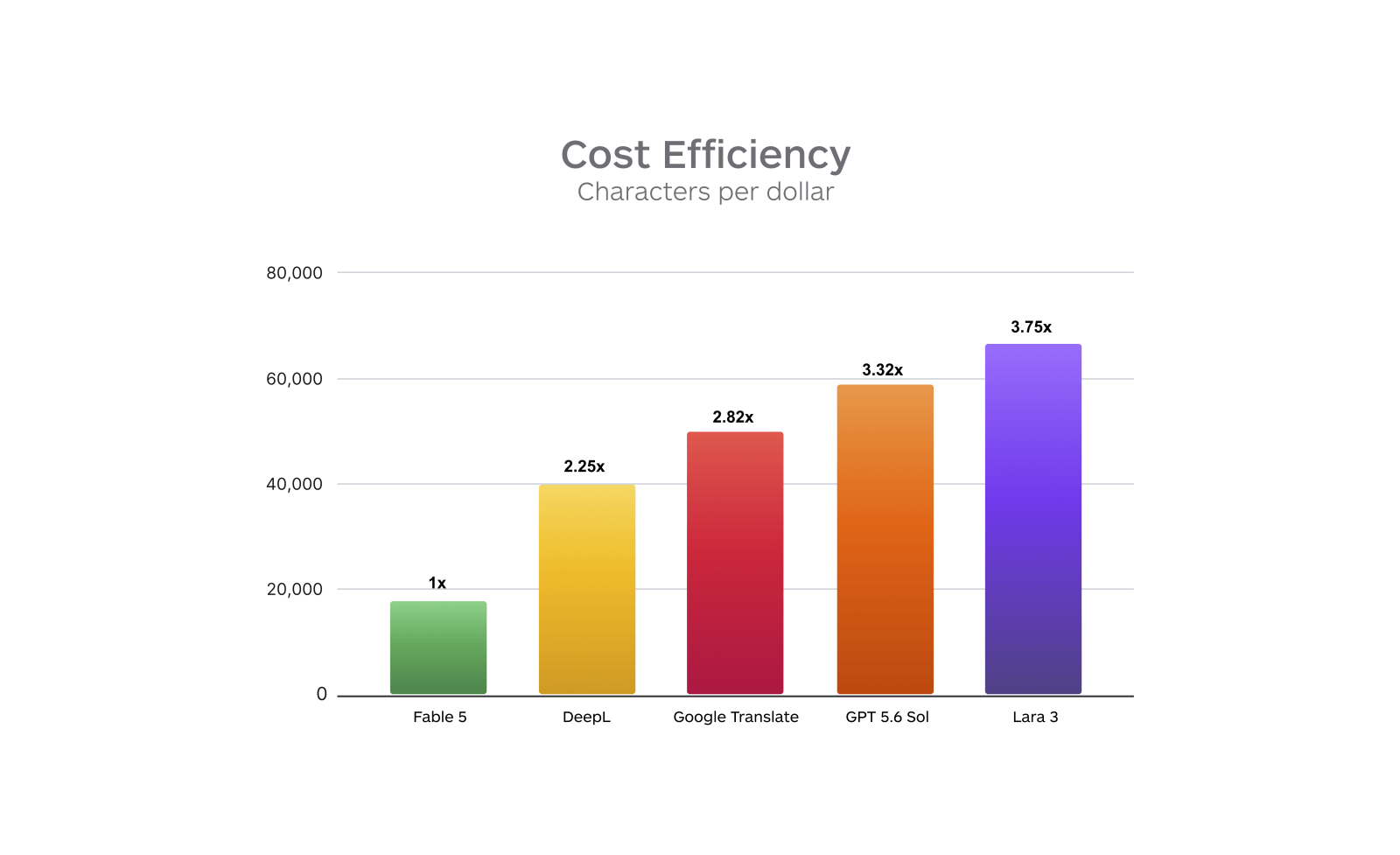
This combination of quality and speed also resulted in the highest cost efficiency of any system tested. For the same budget, Lara 3 processed 3.75 times as many characters as Fable 5 and 13% more than GPT-5.6 Sol, the next most cost-efficient system.
Translated is publishing its full WMT results alongside its production evaluation methodology to allow organizations to assess both approaches and reproduce the evaluations using their own content.
“Quality estimation should not simply tell us, after the fact, that a translation could have been better. It should teach the model how to make a better translation,” commented Marco Trombetti, CEO of Translated. “Professional translators compare alternatives, apply judgment, and improve through experience. Lara 3 brings that same principle into training, turning self-evaluation into immediately better output.”
Translated’s Lara 3 Overview playbook documents the methodology behind these results and provides organizations with practical guidance for configuring Lara, improving translation quality, and building automated workflows that continuously learn from human feedback.
Because enterprises balance protection and model improvement differently, Translated offers a range of data-handling configurations rather than a single policy. These span from environments in which translation data contributes to the continuous improvement of the customer's results, to fully isolated processing with no retention, with data residency available in both the EU and the United States. Customers select the configuration that matches their requirements and can change it as those requirements evolve, and under every configuration they retain ownership of their source content, translation memories, glossaries, and translated output.
Lara 3 is available today for selected partners through the Lara API, TranslationOS, Translated’s adaptive AI service delivery platform, and Lara Translate, the company’s online AI translator. Lara 3 is expected to be publicly available in the coming weeks.